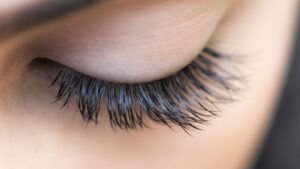
Silk lashes sit between synthetic and mink on almost every salon menu, offering a softer finish than synthetic at a lower price than real mink. This guide explains what silk lashes actually are, how they compare with the alternatives, who they suit and what upkeep they need.
Silk Eyelash Extensions; Are they worth the hype?
You have probably come across different types of false eyelashes, but silk lashes are some of the most popular false lashes out there. False eyelash extensions abound in a wide variety, from mink lashes to silk eyelashes, to synthetic eyelashes. It can be difficult to decide on one, especially as every type of false lashes has its pros and cons. And of course, there is always your budget to consider. We demystified everything concerning eyelashes in this Guide to Eyelash Extensions
What then makes silk eyelashes so popular? What are silk lashes made of? Are they safe to wear? How does one apply silk false lashes? How much do they cost, and how long do they last? In short, are silk lash extensions worth the hype they get?
All of your questions about silk eyelashes, and even more, are answered below. Here we cut through the hype, and guide you through all the technical lash jargon to all the necessary information you need to know about silk lash extensions. Keep reading to find them!
Did you know that silk eyelashes are hypoallergenic? Keep reading to find out more!
What are Silk Eyelashes?
Silk eyelashes are a type of false eyelashes. They are quite popular in the fashion and beauty spheres because they are affordable, durable and most especially, comfortable to wear.
Contrary to popular belief, silk eyelashes are not made from actual real silk, but from a synthetic-based silk fiber called PBT. Real silk cannot be used in making false eyelashes because it is a soft material and as a result, will not be able to hold the shape and curl needed for false eyelashes. However, some lash brands still market their silk lashes as being 100% silk. This should not be taken to mean 100% pure silk.
Silk lashes are not made from real silk but from a synthetic-based silk fiber.
What’s the difference between Mink, Synthetic and Silk lashes?

In the world of false eyelashes, all lashes are not created equal. False eyelashes are created from different types of fibers and materials, and this dictates their quality, and price.
Mink lashes, the most popular and most expensive type of false lashes, are made from the soft tail fur of Siberian or Chinese minks. They are soft, light and have the most natural look you can aim to get from fake lashes. In addition, they last for very long periods of time, depending on how well they are maintained. If you want to know more about Mink lashes, then read this post on Mink Lashes.
Silk lashes, on the other hand, are made from a man-made polyester called Polybutylene terephthalate (PBT), which is also used in making toothbrush fibers, keycaps and showerheads. They are very similar to mink lashes in terms of appearance and style. However, unlike mink lashes, silk eyelashes are very durable, and can withstand more prolonged wearing.
That’s not all…
In addition, silk lash extensions can withstand more handling than mink and synthetic lashes. In fact, they can get wet without losing their curl! This is unlike mink lashes that lose their curl once they get wet and have to be manually curled again.
Synthetic lashes are the cheapest type of fake lashes. However, ironically, the cheapness of synthetic lash extensions comes at a price; they tend to appear more artificial than mink and silk eyelashes. They are not as soft or fluffy as their other counterparts. Instead, they usually have coarse and stubby ends with an overall shiny gaudy look that gives them off as fake eyelashes. Furthermore, as a result of their bulk, synthetic eyelashes can be heavy and feel uncomfortable to wear.

Can silk lashes be reused?
Absolutely!
With proper care and maintenance, you can use silk lash extensions multiple times. And you don’t have to worry, taking care of silk lashes is not as stressful as you think. All it takes is running some makeup remover along the band lash until the glue dissolves. This gets rid of any remnants of glue from your last wear, and keeps the lashes in good shape until the next time you have to wear them.
FAQs
How do silk eyelashes look?

Silk lashes, unlike synthetic lashes and faux mink lashes, usually appear more natural. Like mink lashes, silk lashes are also lightweight and super comfortable to wear. However, silk lash extensions are a little thicker and glossier than mink lashes which generally have a matte appearance.
Silk lash extensions are a better alternative than synthetic lashes because they can be worn longer than the latter. This is due to their softness and porosity. In addition, their curl pattern is not as uniform as that of synthetic lashes, hence their more natural appearance.
How much do silk lashes cost?
The price of silk lashes generally depends on their brand and quality. However, their price ranges between $18-$30 USD for a pair.
How to apply silk lash extensions
Fake lashes will take your appearance from zero to hundred in minutes, but applying them sounds easier than it actually is. For many people, applying false lashes can be very difficult and can easily turn into a nightmare.
Applying false lashes sounds easy, until you try it.
It is because of this that we prepared for you, a very easy, but very detailed guide on How to apply false lashes. If you follow all the steps listed in the guide and try them multiple times, it is only a matter of time before you become a pro at applying fake lashes!
Are silk lashes truly worth the hype?
All the different types of false eyelashes have their pros and cons. While mink lashes offer the most natural appearance, they may still not be the best choice for you, especially if you have allergies to animal furs. Silk lashes on the other hand are hypoallergenic, meaning they contain little to no allergens that can cause you to react.
Mink lashes may be the holy grail of eyelashes, but silk lashes definitely offer more in terms of affordability, comfort, and durability! They are cheap, easy to care for and can be reused multiple times! Silk eyelash extensions are definitely worth the hype they get!
What silk lashes are really made from
The name is misleading and worth clearing up first. Despite what the word suggests, silk lashes are not made from silkworm fibre in any meaningful sense.
They are a synthetic fibre, finished to be softer and more tapered than standard synthetic extensions. The name describes the feel and finish rather than the raw material.
That taper is what matters. Because the fibre narrows toward the tip, silk lashes catch the light less harshly and read as more natural than the flat, glossy finish of standard synthetics.
They are also lighter, which is why silk lashes suit finer natural lashes that would struggle to carry heavier fibres.
Silk compared with synthetic and mink
Three fibres dominate every menu, and the differences are real even though they are often overstated by salons.
Synthetic is the firmest, glossiest and cheapest. It holds curl indefinitely and gives the boldest lash line, but looks most obviously applied. Our guide to synthetic lashes covers that fibre in detail.
Silk lashes sit in the middle. Softer and more tapered than synthetic, lighter on the natural lash, and considerably cheaper than mink. For most people this is the sensible compromise.
Mink is the softest and lightest, made from animal fur, the most expensive, and increasingly declined on ethical grounds. Our mink lash guide explains where it still makes sense.
Judged on value, silk lashes usually win. They deliver most of the softness of mink at a price much closer to synthetic.
Who silk lashes suit
They are the safest default recommendation on the menu, but there are situations where something else serves better.
Anyone with fine or moderately strong natural lashes benefits, since silk lashes add less weight than synthetic while still holding a defined shape.
They suit people wanting a polished but believable result. If you want colleagues to notice your eyes rather than your extensions, silk lashes hit that balance better than synthetic.
Anyone chasing maximum drama should consider volume fans instead, and anyone wanting the absolute lightest option will still prefer mink.
Budget-conscious clients who want to avoid the synthetic gloss will find silk lashes the obvious middle path.
Weight, safety and lash health
Every extension loads the natural lash carrying it, so weight is the factor that determines whether a set is safe long term.
Because they are lighter than synthetic, silk lashes give a little more margin. That does not make them risk-free, and an over-long set will still cause damage regardless of fibre.
A good technician assesses your natural lash strength before agreeing to a length. Anyone applying silk lashes without that check is prioritising the booking over your lash health.
The American Academy of Ophthalmology publishes guidance on extension safety and adhesive reactions worth reading before a first appointment.
Aftercare and retention
Aftercare is where any set succeeds or fails, and silk lashes need the same daily attention as every other fibre.
Keep them dry for the first 24 hours while the adhesive cures. After that, cleanse daily with a dedicated lash cleanser and brush through with a clean spoolie each morning.
Oil breaks adhesive bonds down. Oil-based cleansers, rich eye creams and prolonged steam all shorten how long silk lashes stay attached.
Unlike mink, silk lashes hold their curl when wet, so no re-curling is needed after showering. That is a genuine practical advantage over the more expensive fibre.
Retention still follows your natural lash cycle, so expect fills every two to three weeks.
Common mistakes
Believing the name. Silk lashes are synthetic. Paying a premium on the assumption they are a natural fibre is the most common misunderstanding.
Choosing length over lash health. A set that is too long damages natural lashes regardless of how light the fibre is.
Assuming they need no upkeep. Silk lashes shed as readily as any other fibre without daily cleansing.
Pulling them off. Removal should always be professional or by natural shedding.
Choosing curl, length and thickness
Three specifications appear on every consultation form, and understanding them makes the conversation far more productive.
Curl runs from J through B and C to D. C curl is the most requested because it opens the eye without looking startled, and it pairs well with the soft finish of silk lashes.
Length is measured in millimetres, and a safe rule is no more than two or three beyond your natural lash. Our lash curl chart explains how each curl changes the result.
Thickness is the fibre diameter. Thinner is lighter and safer; thicker creates a bolder line but loads the natural lash considerably more, which erodes the weight advantage silk lashes normally offer.
A good technician maps varying lengths across the eye rather than applying one size throughout. That mapping is what makes a set look designed rather than uniform.
What the appointment involves
Application is identical regardless of fibre, so booking silk lashes follows the same routine as any extension appointment.
You lie down with your eyes closed while the lower lashes are taped away. Each extension is bonded to one isolated natural lash, working along the line in sequence.
Expect a consultation covering curl, length and thickness first. A technician who skips this and simply applies a standard set is not tailoring silk lashes to your eyes at all.
You will be asked to keep your eyes closed briefly at the end while the adhesive cures fully. Most people find the whole session restful.
Frequently asked questions
Are silk lashes vegan?
Yes. Despite the name, the fibre is synthetic rather than animal-derived, which makes silk lashes a straightforward choice for anyone avoiding mink on ethical grounds.
Can I swim and shower normally?
Yes, after the first 24 hours. Silk lashes hold their curl when wet, so unlike mink they need no reshaping afterwards.
How long does a full set last?
Retention follows your natural shedding cycle rather than the fibre, so expect fills every two to three weeks like any other set.
Do they suit sensitive eyes?
Usually, since reactions are almost always to the adhesive rather than the fibre. Ask about sensitive-formula adhesives and request a patch test before committing to a full set.
Making a set last longer
Retention is mostly within your control, and the difference between a diligent client and a careless one is often two full weeks of wear.
Brush them each morning. Fibres shift overnight, and thirty seconds with a clean spoolie restores the shape of silk lashes without any other intervention.
Sleep on your back where possible, or switch to a silk pillowcase. Friction against cotton is one of the quieter causes of premature shedding, and it costs nothing to fix.
Read the ingredients on your eye products. Many cleansers marketed as gentle still contain oils that dissolve adhesive, which shortens how long silk lashes stay bonded.
Book fills before the shape blurs rather than after. Leaving it too long means paying for a full set again, which is the most expensive habit in lash care.
Signs of a good technician
Application quality determines both how a set looks and how your natural lashes fare underneath it, so it matters more than the fibre on the price list.
They should examine your natural lashes before agreeing to anything, and be willing to talk you out of a length that will not suit them.
The appointment should be unhurried. Isolating each natural lash properly takes time, and rushing is the usual cause of extensions bonded to two lashes at once, which causes real damage regardless of whether you chose silk lashes or anything else.
Hygiene should be visible without you having to ask about it: clean tools, fresh tape and properly washed hands before they begin.
Finally, they should explain aftercare unprompted. A technician invested in retention wants your silk lashes to last, because that is what brings you back.
Conclusion
Silk lashes are the sensible middle of the extension market. Softer and lighter than synthetic, considerably cheaper than mink, and natural-looking enough for everyday wear without looking obviously applied.
The name oversells them, and it is worth knowing they are a synthetic fibre rather than a natural one before paying any premium. Judged honestly on performance rather than marketing, they still represent the best value on most menus.
Choose a length your natural lashes can carry, cleanse daily, and book removal rather than pulling. Do that and silk lashes will give you a soft, believable result at a price that makes sense.