A Beginner's Guide to Lash Extensions: Understanding Different Types of Lash Curls
August 10, 2020
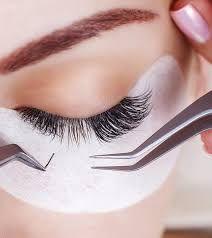
Booking your first set of lash extensions can feel like ordering coffee in a language you don't speak. Your lash artist asks whether you want a C or a D curl, 0.07 or 0.15, classic or volume, and it all sounds like code. This guide breaks the code so you can walk into your appointment confident about what you're asking for.
What lash extensions actually are
Lash extensions are individual synthetic fibers that a trained technician bonds to your natural lashes, one at a time, with a semi-permanent adhesive. They are not strip lashes and they are not glued to your eyelid. Each extension sits on a single natural lash, just above the lash line, and falls out naturally when that lash sheds. That's why extensions need regular "fills" every two to three weeks.
The four things that shape your look
Almost every lash style comes down to four variables: the material, the curl, the length and the thickness. Change any one of them and the result changes noticeably.
1. Material
- Synthetic (PBT) lashes are firm, glossy and hold their curl well. They give a bolder, more defined look.
- "Silk" lashes are also synthetic, despite the name. They're finished to be softer and a little more matte, sitting between synthetic and mink.
- Mink and faux mink. Real mink lashes are made from animal fur, which many salons no longer use. Faux mink is a very fine, soft synthetic that mimics the look without the animal product.

2. Curl
Curl is described by a letter. The letters roughly follow how much the lash bends:
| Curl | Look | Good for |
|---|---|---|
| J | Barely curved, the most natural | People with naturally straight lashes who want length without obvious lift |
| B | A soft, gentle curve | A subtle "my lashes but better" result |
| C | A clear, medium curl | Most people; it's the most popular curl |
| D | A strong, dramatic curl | A wide-open, doll-eye look or hooded eyes |
You'll also see in-between curls like CC, and specialty shapes like L and M for very straight or downward-pointing natural lashes. If you're unsure, a C curl is a safe first choice.

3. Length
Extensions are measured in millimeters, usually from about 6mm to 15mm. A good artist uses several lengths across the eye, shorter in the inner corner and longer toward the middle or outer edge, depending on the style. As a rule, an extension shouldn't be dramatically longer than your natural lash can support, or it will weigh the lash down.
4. Thickness (diameter)
Thickness ranges from ultra-fine 0.03mm fibers, which are fanned out several at a time for volume sets, up to around 0.20mm for single classic lashes. Thicker isn't always better. Heavier lashes can stress fine natural lashes, so artists match the diameter to the strength of your own lashes.
Classic, hybrid and volume
- Classic: one extension per natural lash. Defined and natural, like wearing mascara.
- Volume: a handmade fan of several ultra-fine extensions on each natural lash. Fuller and fluffier.
- Hybrid: a mix of classic and volume for texture somewhere in between.
We compare these in detail in Classic vs Volume Lash Extensions.
What to ask at your first appointment
- What curl and length do you recommend for my eye shape and natural lashes?
- Can I have a patch test first? Most adhesives contain cyanoacrylate, which some people react to.
- How long should I keep them dry afterwards, and how often will I need fills?
Once you know the vocabulary, the rest is about choosing a look you love. Explore our guides to J, B, C and D curls to dig deeper.